
Copper River White Pages
Copper River Census Area White Pages searches usually start with Copper Center, the largest community in the area, and then move to the state office that keeps the record. The population is about 2,600, and the census area was also part of the former Valdez-Cordova Census Area, so older references can still show up in local memory and older records. That makes a careful White Pages search more important, not less. Start with the court system if a case might exist, and use the recorder office when a name begins to look like a land or deed trail.
Copper River White Pages Overview
Copper River White Pages work is best when you keep the search local and practical. The area is thinly populated, and Copper Center is the main community name most people will use when they start a lookup. That means a person search often becomes an office search very quickly. If the question is about a case, the Alaska Court System is the right public route. If the question is about land, a filing, or a deed, the recorder page is the better fit. That split saves time and keeps the search grounded.
Because Copper River came from the former Valdez-Cordova Census Area, old references can still matter. A record might use an older place name, an older community note, or a trail that was first created before the current census area lines were set. White Pages research is strongest when it can carry those older references forward without making them the whole search. You are not looking for a perfect directory listing. You are looking for the office that owns the file.
The interior setting also matters. Even when the search is simple, the record path may not be. A person in Copper Center can show up in a court file, then again in a property record, then again in a historical source. If you know that pattern up front, the search gets easier. Copper River White Pages pages work best when they point directly to the record keeper and not just the nearest name on a map.
Copper River White Pages Image
The Alaska Department of Natural Resources Recorder's Office page at dnr.alaska.gov/ssd/recoff/About is the best visual anchor for a Copper River White Pages search that turns into land or deed work.
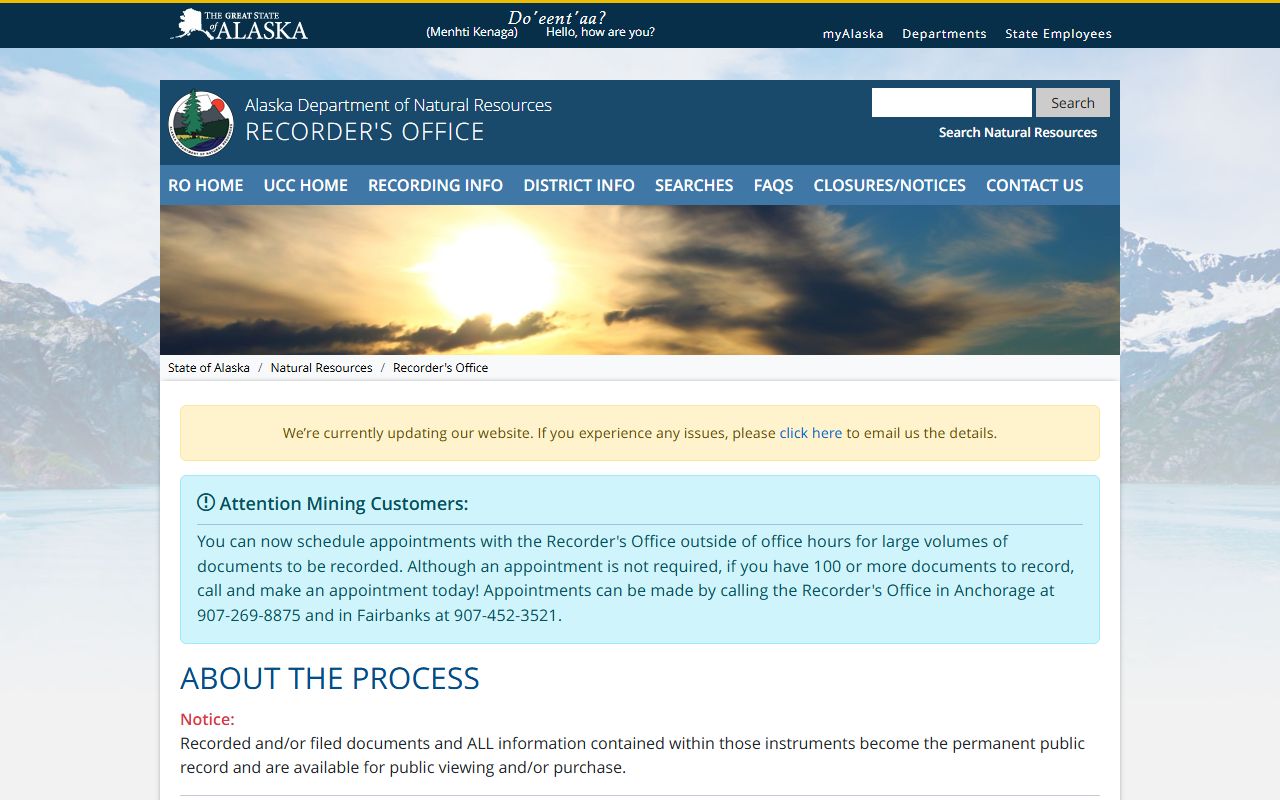
That source is the right starting point when a name needs to be matched with a recording district, a deed, or another recorded instrument.
Copper River White Pages Courts
The Alaska Court System case search is the right first stop for Copper River White Pages court work. It lets you confirm whether a case exists before you contact a courthouse or make a request. In a small census area, that matters because the same name can show up in more than one setting. If the search returns a case, you know you are dealing with a real court file instead of a guess.
That online check is especially useful when the name starts with Copper Center but may connect to another Alaska court location. The point is not to guess the courthouse from the community alone. The point is to see whether the person or event appears in the court system at all. Once you know that, you can decide whether the next move is a local visit, a phone call, or a written request. That is the practical side of White Pages research.
Copper River White Pages searches work well when the court question comes before the follow-up question. A broad search can waste time. A court search can narrow the trail in one step. That is why the statewide case search belongs near the top of the page and near the top of the work process.
Copper River White Pages Property Records
Property records for Copper River Census Area White Pages searches live with the Alaska DNR Recorder's Office. The recorder overview at dnr.alaska.gov/ssd/recoff/About explains how recorded documents are organized and how public access fits into the system. That matters when a search starts with a name but ends with a legal description, a deed trail, or a recorded filing that only the state office can confirm.
In Copper River, that property step is often the most useful one after the community name itself. A person may live in Copper Center, own a parcel, and appear in the recorder index even when no city office is involved. The recorder system is the cleanest public source for that kind of work. It is also the best place to check whether a name belongs to a filing that needs a county style map, a recorded instrument, or a district reference.
If the search begins to look historical, do not stop at the current recorder page. Move the trail forward in order. Start with the state recording office, then use archives if the name is older than the current public system. Copper River White Pages research is stronger when the record type drives the order of the search instead of a broad guess about where a file should be.
Copper River White Pages Public Records
When a Copper River White Pages search becomes a formal request, the Alaska Public Records Act and the state statute page give the framework. Use law.alaska.gov/doclibrary/APRA.html and www.akleg.gov/basis/statutes.asp#40.25.100 to understand how the office should treat the request. Those links are useful because they explain the rules before you send the request, not after the office has already asked for more detail.
That detail matters in a small census area. A request that names Copper Center, the record type, and a date range is easier to route than a general ask that only says you need a public record. White Pages work is at its best when it gives staff a clean office, a clear subject, and a simple date span. That makes the search faster and more likely to end with the right file.
The Alaska State Archives genealogy page at archives.alaska.gov/genealogy/genealogy.html is the best fallback when the search shifts from a current office to an older trail. In Copper River, old references from the Valdez-Cordova era may still show up in a family line, a community note, or a historic record. The archives page helps you keep that search moving instead of leaving it stuck at the first office.
Note: In Copper River, Copper Center is the best starting point, but the real answer often sits with the court or recorder office.
Copper River White Pages Local Trail
Copper River White Pages research is often a two-step trail. First you identify the community. Then you identify the office. That is why Copper Center matters so much here. It gives the search a local anchor, but it does not replace the state systems that hold the record. Once you know that, you can move through the search with less guesswork and fewer dead ends. That is especially useful in an area where older Valdez-Cordova references can still appear in documents or oral history.
If the name is tied to a case, the court search comes first. If the name is tied to land, the recorder page comes first. If the name is historical, archives come after the current office. That sequence is simple, but it works. It keeps the search in the right order and helps you avoid asking one office for a record that belongs somewhere else. Copper River White Pages pages should make that path feel obvious.
The result is a search that feels local even though the files sit in state systems. That is the real shape of Alaska White Pages work in a place like Copper River. Use the community name to start. Use the state office to finish. That is the cleanest way to reach the record you need.