
Prince of Wales-Hyder White Pages
Prince of Wales-Hyder Census Area White Pages searches usually begin with Craig or Klawock, the two largest communities, and then move to the office that actually holds the file. The population is 5,753. Court services run through the Alaska Court System First Judicial District, property records go through the Recorder's Office in that district frame, and vital records requests go through the Bureau of Vital Statistics. That means the search is local in feel but state based in practice. The right White Pages path is the one that matches the record type from the start.
Prince of Wales-Hyder White Pages Overview
Prince of Wales-Hyder White Pages research works best when you start with the community and then move to the state source that matches the record. Craig and Klawock are the largest communities, so those names often appear first in local memory, address clues, or older references. That does not mean the record itself lives in a local city office. It often means the search has only reached the starting point. The actual file may be in court, in the recorder system, or with the Bureau of Vital Statistics.
The First Judicial District frame is useful because it tells you where the court and property pathways belong. It also gives the search a clear district identity, which matters in a census area that covers many islands and communities. White Pages research here is not about a long contact list. It is about finding the right public office for the question you have. That office can change depending on whether the trail is about a case, a parcel, or a vital record.
Because the communities are spread out, the search should stay lean. Use the name that appears in the source, identify the community that anchors it, and then move to the office that owns the record. That keeps Prince of Wales-Hyder White Pages pages practical and easy to use even when the local geography is complex.
Prince of Wales-Hyder White Pages Image
The Alaska DNR Recorder's Office page at dnr.alaska.gov/ssd/recoff/About is the best visual anchor for Prince of Wales-Hyder White Pages property work and recorded document searches.
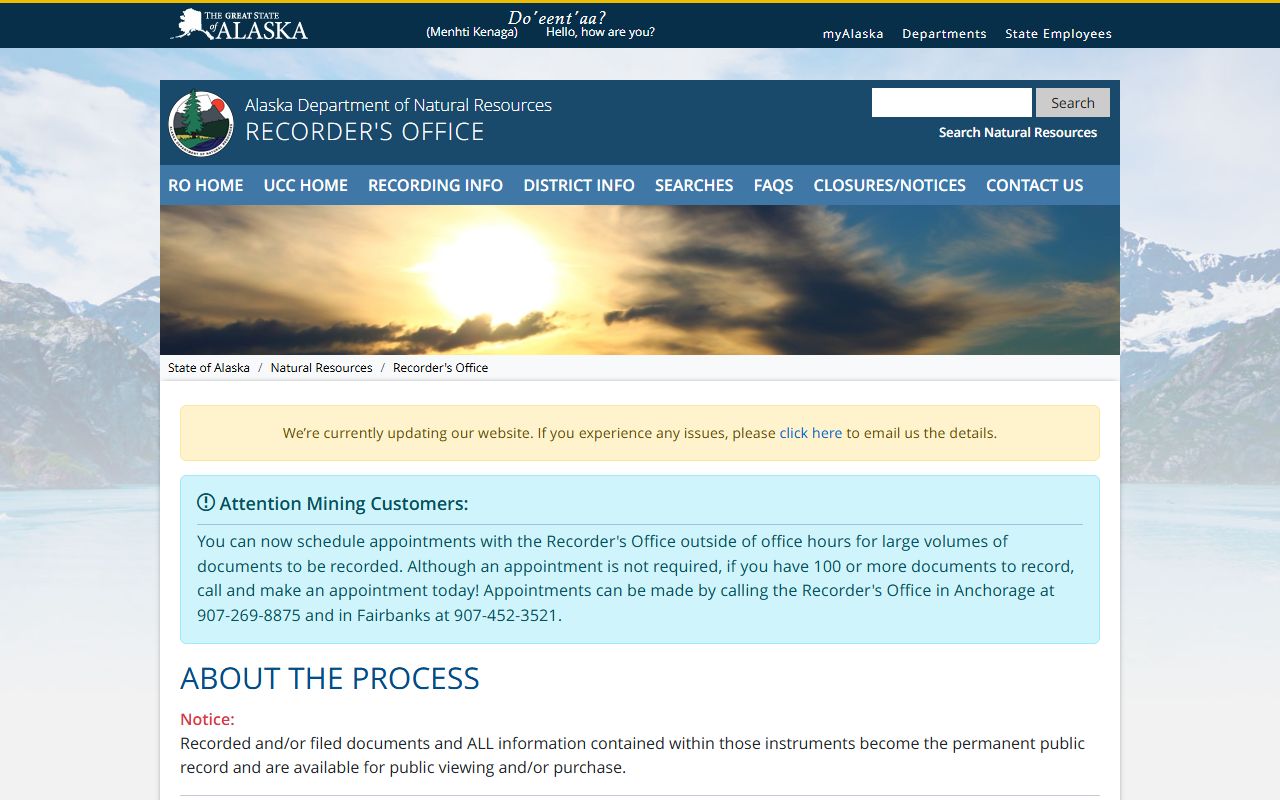
That image fits the district because the recorder side is a major part of the record trail here.
Prince of Wales-Hyder White Pages Courts
The Alaska Court System case search is the first court tool to use for Prince of Wales-Hyder White Pages work. It lets you check party names and docket details before you contact a courthouse or ask for a copy. That is useful when a community name is clear but the person name might appear in more than one place. The online search gives you the first clean check and keeps the rest of the work focused.
Because the census area sits in the First Judicial District, the district frame is part of the answer. It helps separate the court trail from the property trail and from the vital records trail. That separation matters. A White Pages search should not treat all records as the same thing. The court system holds case files. The recorder holds land filings. The vital records office handles certificates. Each one needs a different next step.
That is why the court search belongs at the top of the workflow. It gives you a simple answer to a simple question. Does the name appear in a case? If yes, you know where to go next. If no, you can move to the other state record lanes without wasting time. That is the best way to keep Prince of Wales-Hyder White Pages research moving.
Prince of Wales-Hyder White Pages Property Records
Property records for Prince of Wales-Hyder White Pages searches belong with the Alaska DNR Recorder's Office in the First Judicial District frame. The office overview at dnr.alaska.gov/ssd/recoff/About explains how recorded documents are organized and why the system matters for deeds, liens, plats, and other filings. That is the right route when a name becomes a land question. It is also the right route when you need the recorded instrument rather than a general contact clue.
The district detail matters because it keeps the property search local in feel even though the office is state based. A person in Craig or Klawock may show up in a property filing that belongs to the first judicial recording system. White Pages work becomes much easier when you know that the community name and the recording district are not the same thing. One is the place. The other is the file source.
That distinction is especially useful when a search begins with a local address or a family name and ends with a land trail. Use the recorder page first, then move to archives if the record is older. Prince of Wales-Hyder pages should make that path obvious so the user can move from a community clue to a real record quickly.
Prince of Wales-Hyder White Pages Vital Records
Vital records are part of Prince of Wales-Hyder White Pages work too. The Alaska Bureau of Vital Statistics contact page at health.alaska.gov/dph/VitalState/Pages/contacts/contact is the official starting point for birth, death, marriage, and divorce certificate questions. That is the right path when a person search needs to become a certificate search. It keeps the request in the proper state office instead of sending it to a court or property desk.
This is useful in a census area where names can travel across communities and records can be separated by office type. A White Pages lookup may begin with Craig or Klawock, but the answer you need may be a certificate request in Juneau or another state processing path. The Bureau of Vital Statistics page tells you where to begin and keeps the search practical. If the question is historical, archives may help later, but the vital records office is the right first stop for current certificate work.
The vital record lane also helps when a family name appears in older local material but needs official proof from the state. Prince of Wales-Hyder White Pages pages should not blur that line. They should show the user that a community reference and a certificate record are related but not the same. That clarity saves time and keeps the request accurate.
Prince of Wales-Hyder White Pages Public Records
When a Prince of Wales-Hyder White Pages search turns into a public records request, the Alaska Public Records Act at law.alaska.gov/doclibrary/APRA.html and the state statute page at www.akleg.gov/basis/statutes.asp#40.25.100 explain the access rules. That is useful because it shows what the office can do before you write the request. In a census area with two strong community anchors and several record types, that detail helps you aim the request correctly.
The Alaska State Archives genealogy page at archives.alaska.gov/genealogy/genealogy.html is a sensible fallback for older names and older records. It is helpful when a Prince of Wales-Hyder search begins with a person and ends with historical material rather than a current office file. Archives can keep the search moving when the modern systems only give you part of the answer.
That is the full White Pages trail here. Community name first. Office second. File type third. If you keep that order, the search stays clean and the answer is easier to trust.
Note: In Prince of Wales-Hyder, Craig and Klawock are the best anchors, but the record type decides whether court, recorder, or vital records comes next.
Prince of Wales-Hyder White Pages Search Flow
Prince of Wales-Hyder White Pages searches are best when you do not try to solve everything at once. A community name is a starting point. A court case, a parcel, or a certificate tells you which state office should answer. That means the page should guide the user from the community to the office without making them guess the route. The record is the goal. The community is only the clue.
That approach works well in a large and varied census area like this one. The geography can be complex, but the record types are not. Court, recorder, and vital records each have a clear home. Once you know which one you need, the search gets much simpler. Prince of Wales-Hyder White Pages pages should make that logic easy to follow from the first line onward.
Use the district frame, use the community names, and then use the state office that fits the file. That is the most direct way to keep a White Pages lookup local in meaning and accurate in practice.